Table of Contents
- Captive-bred Great Indian Bustards released in Desert National Park (GS 3 – Environment)
- Odisha vs Chhattisgarh: Mahanadi water dispute back in spotlight (GS 2 – Polity, Federalism)
- Green Energy Corridor Phase III: Tackling the renewable transmission bottleneck (GS 3 – Energy, Infrastructure)
- Birds louder than elephants, jackhammers and chainsaws (GS 3 – Science, Biodiversity)
- Yemen launches offensive to seize all areas from Iran-backed Houthis (GS 2 – International Relations)
- Coal mine near Ramappa Temple: threat to a UNESCO World Heritage Site (GS 1 – Culture; GS 3 – Environment)
- Vithya Ramraj’s record: how far has India come in 400m hurdles? (Sports, Prelims GK)
- Ethiopia’s government retakes Mekelle after Tigrayan fighters withdraw (GS 2 – International Relations)
1. Two Captive-Bred Great Indian Bustards Released in Desert National Park
Why in News?
For the first time, captive-bred Great Indian Bustards (GIB), locally called Godawan, have been released into the wild in Rajasthan’s Desert National Park (DNP). Releases were scheduled at Ramdevra on October 3 and the Sudasari area of DNP on October 4, 2026. This marks the shift of Project GIB from captive breeding to actual reintroduction.
Background: From Egg Collection to Rewilding
- Rajasthan opened India’s first GIB Conservation Breeding Centre at Sam village (Jaisalmer) in 2018; a second centre came up at Ramdevra, Pokhran in 2022.
- Early stock came from eggs collected in the wild and hand-reared at the centres.
- India’s first captive-bred GIB chick hatched in 2023 through artificial insemination.
- In July 2026, three chicks were placed in a ₹9.25-crore rewilding tunnel at Ramdevra, where they spent about four months with minimal human contact under CCTV watch.
- Ten birds completed rewilding training ahead of this release; Wildlife Institute of India (WII) scientists decided how many go out in the first phase.
- Released birds will be tracked under a scientific monitoring protocol to test whether they can survive and breed in the wild.
Key Facts for Prelims
| Parameter | Detail |
|---|---|
| Scientific name | Ardeotis nigriceps |
| Local name | Godawan (State bird of Rajasthan) |
| IUCN status | Critically Endangered |
| Wildlife (Protection) Act, 1972 | Schedule I |
| CITES / CMS | Appendix I / Appendix I |
| Population | About 173 birds (2025), including roughly 45 in captivity at that time |
| Main habitat | Thar Desert – Desert National Park (Jaisalmer & Barmer) |
| Other states | Small numbers in Gujarat, Maharashtra, Karnataka, Andhra Pradesh |
| Biggest threat | Collision with overhead power lines (poor frontal vision) |
| Partners | MoEFCC, WII, Rajasthan Forest Department; funded via National CAMPA |
| Other Indian bustards | Lesser Florican, Bengal Florican, Macqueen’s (Houbara) Bustard |
Mains Angle
- Significance: Rebuilding a wild population that has fallen from about 1,260 birds in 1969 to under 200 today; GIB is a flagship species for India’s neglected grassland ecosystems.
- Challenges: Predators (feral dogs, foxes), power lines, shrinking grasslands classed as “wastelands”, and the clash with solar and wind projects in the Thar.
- Way forward: Undergrounding or bird-diverters on high-risk power lines, predator-proof enclosures, community participation, and grassland protection beyond Rajasthan.
2. Odisha vs Chhattisgarh: Mahanadi Water Dispute Back in the Spotlight
Why in News?
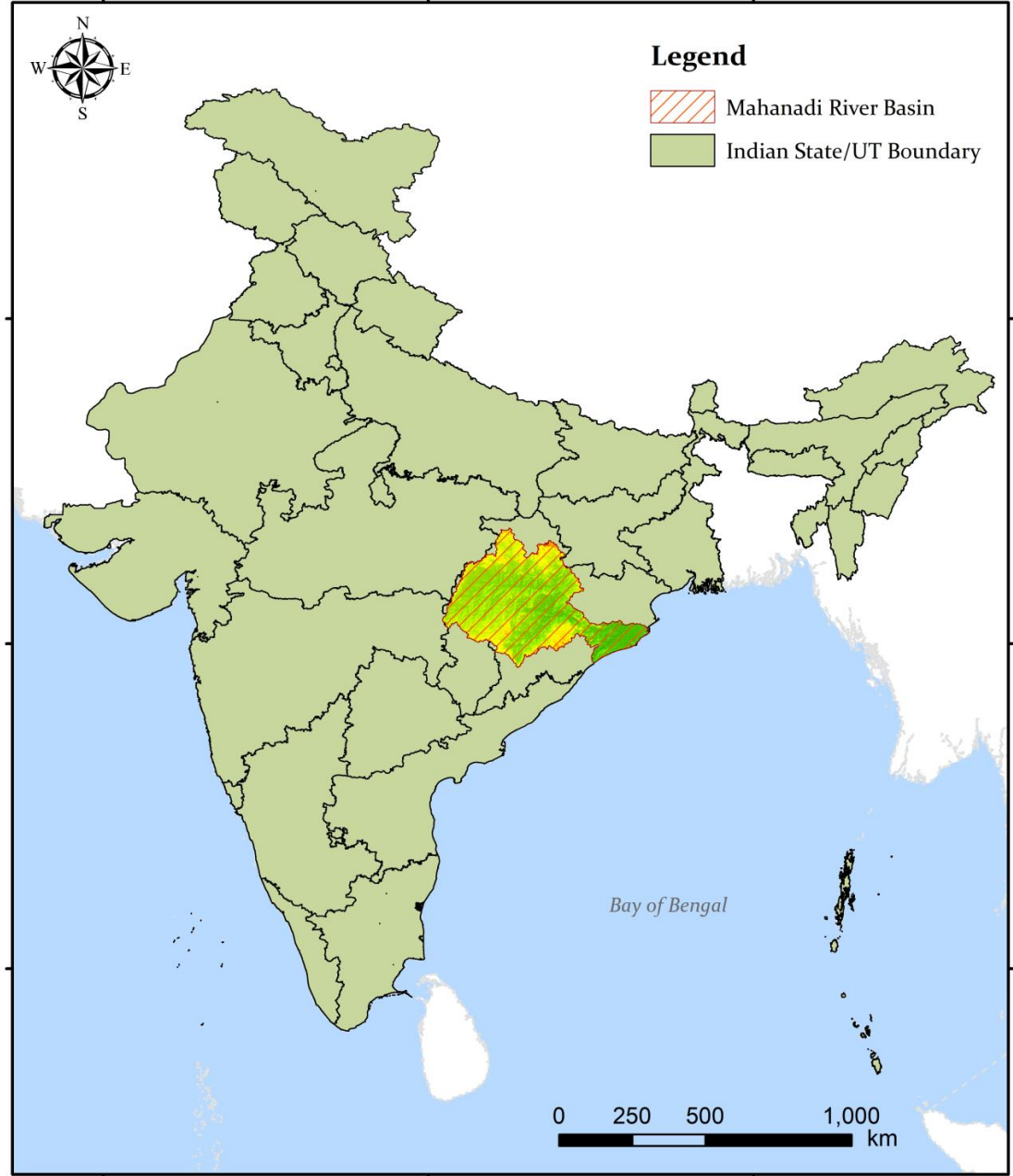
On October 1, 2026, Union Home Minister Amit Shah chaired a meeting in New Delhi with Chhattisgarh CM Vishnu Deo Sai and Odisha CM Mohan Charan Majhi to settle the decade-old Mahanadi dispute through negotiation. Earlier, in July 2026, the Mahanadi Water Disputes Tribunal (MWDT) urged both states to seek an amicable settlement, with the Central Water Commission (CWC) and Jal Shakti Ministry helping broker it. Both states have given written assurance that they will accept CWC’s decision.
What Is the Dispute?
- Odisha’s case (lower riparian): Barrages and industrial projects built upstream in Chhattisgarh cut the river’s lean-season (non-monsoon) flow into Odisha, hurting Hirakud and downstream irrigation.
- Chhattisgarh’s case (upper riparian): With the larger share of the catchment, it says it is only using its fair share for irrigation, industry and drinking water.
- Odisha cites six industrial barrages built by Chhattisgarh as the trigger.
Timeline
- 1983 – Agreement between Odisha and undivided Madhya Pradesh on joint projects; Chhattisgarh still cites it.
- 2016 – Odisha files a suit in the Supreme Court under Article 131 and asks the Centre for a tribunal.
- March 2018 – MWDT constituted under the Inter-State River Water Disputes Act, 1956.
- April 2026 – Tribunal gives the states a final window for settlement.
- July 2026 – Tribunal pushes dialogue; CMs meet under the Jal Shakti Minister.
- October 1, 2026 – Meeting chaired by the Union Home Minister.
Key Facts for Prelims
| Parameter | Detail |
|---|---|
| Origin | Sihawa hills, Dhamtari district, Chhattisgarh |
| Mouth | Bay of Bengal (Odisha) |
| Basin states | Chhattisgarh (~53%), Odisha (~46%), small parts of Jharkhand, Maharashtra, MP |
| Major dam | Hirakud (Odisha) – one of the longest earthen dams in the world |
| Tributaries | Seonath, Hasdeo, Mand, Ib, Jonk, Tel |
| Constitutional provision | Article 262 – Parliament may bar courts from water disputes |
| Law | Inter-State River Water Disputes Act, 1956 |
| Pending reform | Inter-State River Water Disputes (Amendment) Bill, 2019 – single permanent tribunal + Dispute Resolution Committee |
Mains Angle
- Issues: Ad-hoc tribunals take decades; awards are hard to enforce; lack of reliable basin-wide flow data.
- Way forward: Single permanent tribunal, a basin authority, real-time hydrological data shared by both states, and cooperative federalism through negotiated settlements.
3. Green Energy Corridor Phase III: Tackling the Renewable Power Transmission Bottleneck
Why in News?
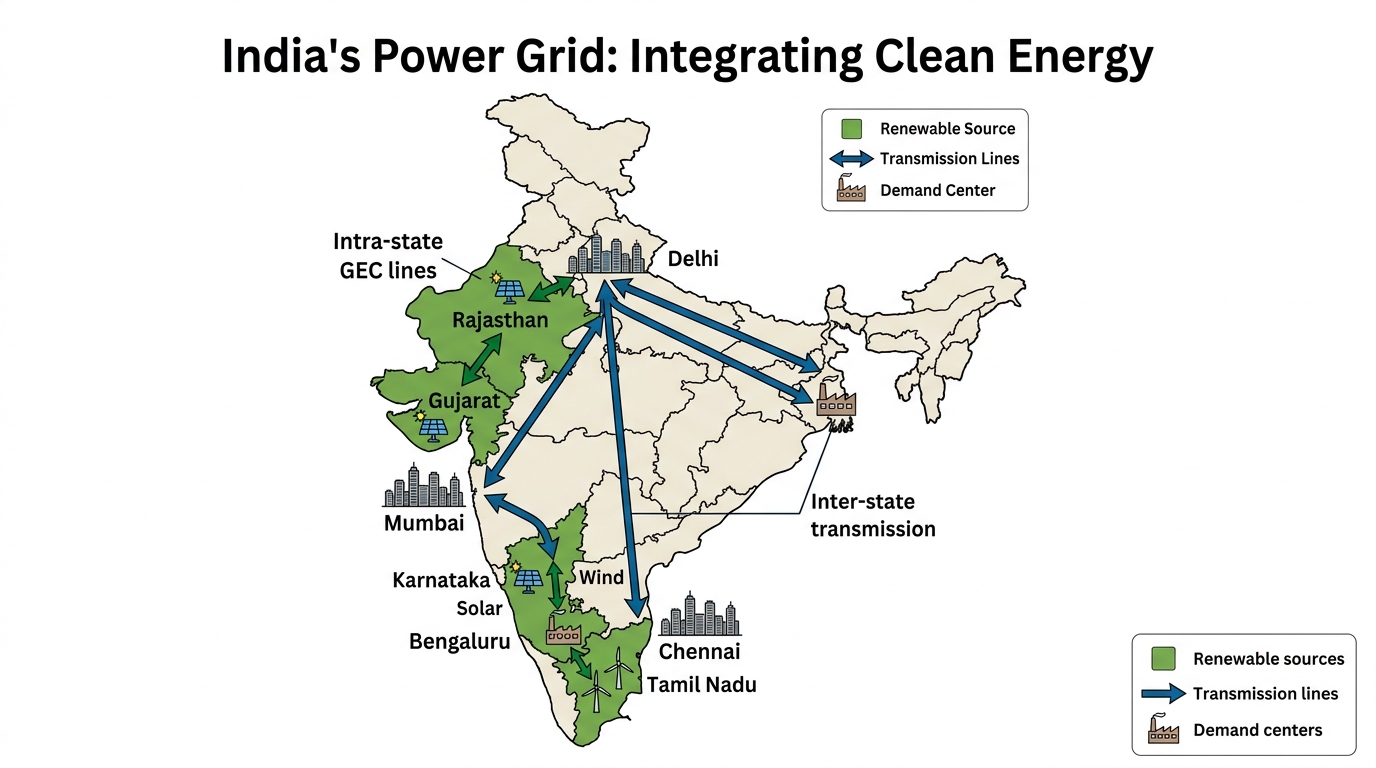
On September 30, 2026, the Union Cabinet approved Green Energy Corridor Phase III (GEC-III) with an outlay of ₹1,86,405 crore. It will strengthen intra-state transmission to evacuate up to 135 GW of renewable energy by FY 2032-33. For the first time, the GEC programme also funds battery storage alongside transmission lines.
The Problem: Renewables Are Growing Faster Than the Grid
- Close to 21 GW (about 9% of installed renewable capacity) runs on temporary grid connections, awaiting dedicated lines.
- In FY 2025-26, around 6,900 GWh of clean power was curtailed because transmission could not keep pace.
- Solar peaks at midday, while demand peaks in the evening; without storage, the surplus is wasted.
Components of GEC-III
| Component | Outlay | Purpose |
|---|---|---|
| Intra-State Transmission System (InSTS) | ₹1,36,378 crore | New and upgraded state grids to carry RE power |
| Battery Energy Storage Systems (BESS) – 50 GWh | ₹50,000 crore | Handle intermittency, congestion, peak-hour curtailment and non-solar-hour demand |
| Central financial assistance | ~₹54,082 crore | Offset intra-state transmission charges and lower RE tariffs |
- Greenfield projects: tariff-based competitive bidding (TBCB); brownfield upgrades: cost-plus basis.
- Implementing agencies: State Transmission Utilities, under Section 39(2) of the Electricity Act, 2003.
Key Facts for Prelims
| Phase | Approved | Scale |
|---|---|---|
| GEC-I | 2015 | Intra-state + inter-state lines in RE-rich states |
| GEC-II | January 2022 | ₹12,031 crore; ~20 GW in 7 states (Gujarat, HP, Karnataka, Kerala, Rajasthan, TN, UP) |
| GEC-II Ladakh | 2023 | ₹20,773.7 crore; 13 GW RE + 12 GWh BESS (inter-state) |
| GEC-III | September 30, 2026 | ₹1,86,405 crore; 135 GW + 50 GWh BESS; by FY 2032-33 |
- Ministry: Ministry of New and Renewable Energy (MNRE).
- National target: 500 GW non-fossil capacity by 2030.
Mains Angle
- Significance: Shifts India’s clean-energy push from adding capacity to delivering and storing it; supports NDC and net-zero 2070 goals.
- Concerns: Right-of-way delays, weak finances of state utilities, BESS supply chains dependent on imported cells, and line routing through GIB habitat (link with Topic 1).
4. High Decibel: Birds Louder Than Elephants, Jackhammers and Chainsaws
Why in News?
A study published in the journal Evolution on September 29, 2026, named two new contenders for the world’s loudest bird: the bare-throated bellbird and the red-legged seriema. Both produce calls that peak above 120 decibels (dB), louder than a jackhammer. Researchers João C.T. Menezes and Jeff Podos (University of Massachusetts Amherst) measured 123 bird species in the US and Brazil.
Key Findings
- Bird call volume varies by about 58 dB across species, from hummingbirds (~64 dB, normal conversation level) to the bellbirds and seriema (>120 dB).
- The male white bellbird of the Amazon still holds the record at about 125 dB (confirmed by Guinness World Records), louder than a revving chainsaw.
- The screaming piha comes next at about 116 dB.
- Larger body size and a wider beak opening predict louder calls: bigger muscles build more internal pressure, and a broad gape radiates more sound.
- Yet some birds out-shout far bigger animals like elephants, lions and bison, so an unknown mechanism is also at work.
- The team used laser rangefinders (the kind golfers use) to record volume and distance at the same time, giving more reliable data.
- The team’s guesses that loud birds would be weak flyers, forest dwellers and polygamous could not be confirmed.
Key Facts for Prelims
| Species | Peak call | Region |
|---|---|---|
| White bellbird | ~125 dB (world record) | Amazon, Brazil |
| Red-legged seriema | >120 dB | Grasslands of eastern South America |
| Bare-throated bellbird | >120 dB | Atlantic Forest, South America |
| Screaming piha | ~116 dB | Amazon |
| Hummingbird (for contrast) | ~64 dB | Americas |
- Decibel (dB): A logarithmic unit; every 10 dB rise means about 10 times the sound intensity.
- Sounds above 85 dB can damage human hearing with prolonged exposure.
- The Central Pollution Control Board (CPCB) sets ambient noise limits in India under the Noise Pollution (Regulation and Control) Rules, 2000.
5. Yemen Launches Offensive to Seize All Areas from Iran-Backed Houthis
Why in News?
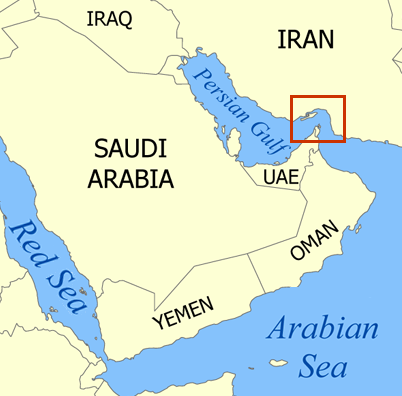
Yemen’s internationally recognised, Saudi-backed government has declared a military campaign to recapture the capital Sanaa and all territory held by the Iran-backed Houthis. Officials, including Deputy Defence Minister Samir Al-Sabri, say the aim is to end Houthi control and restore Sanaa as the capital for all Yemenis.
How the Escalation Unfolded (2026)
- July – Fighting resumed after government forces struck Houthi-held Sanaa airport to block an aircraft from Iran.
- August – Deadly Houthi missile and drone attacks in Marib and Hadramawt, spilling into Saudi Arabia; government launches multi-front strikes.
- September 3 – Houthis open a ground offensive on the west coast and west Taiz, eyeing the Bab-el-Mandeb.
- September 7 onward – Government counter-offensive in Al-Jawf (Al-Labanat, Al-Yatama) and Al-Bayda, with tribal mobilisation and Saudi air support.
- Now – Government declares the goal of retaking Sanaa and all Houthi-held areas.
Background: Yemen’s Civil War
- 2014: Houthis (Ansar Allah, a Zaidi Shia movement) seize Sanaa.
- 2015: Saudi-led coalition intervenes on behalf of the government.
- April 2022: UN-brokered truce sharply reduces fighting; it formally lapsed in October 2022 but froze frontlines.
- 2023–25: Houthis attack Red Sea shipping, linking Yemen’s war to the wider West Asia conflict.
- The government is led by the Presidential Leadership Council (PLC), based in Aden.
Key Facts for Prelims
| Item | Detail |
|---|---|
| Capital (de jure) | Sanaa (Houthi-held); government operates from Aden |
| Strategic chokepoint | Bab-el-Mandeb Strait – links Red Sea and Gulf of Aden |
| Key port | Hodeidah (Houthi-held, Red Sea) |
| Houthi backers | Iran (part of the “Axis of Resistance”) |
| Government backers | Saudi Arabia-led coalition |
| Neighbours | Saudi Arabia, Oman |
India Angle
- About 12% of global trade passes through the Red Sea route; disruption raises India’s freight and insurance costs.
- Indian Navy deployments in the Gulf of Aden and Arabian Sea for anti-piracy and merchant ship safety.
- Safety of the Indian diaspora; India ran Operation Rahat (2015) to evacuate nationals from Yemen.
6. Coal Mine Near Ramappa Temple: Activists Fear Harm to Heritage Site and Lake
Why in News?
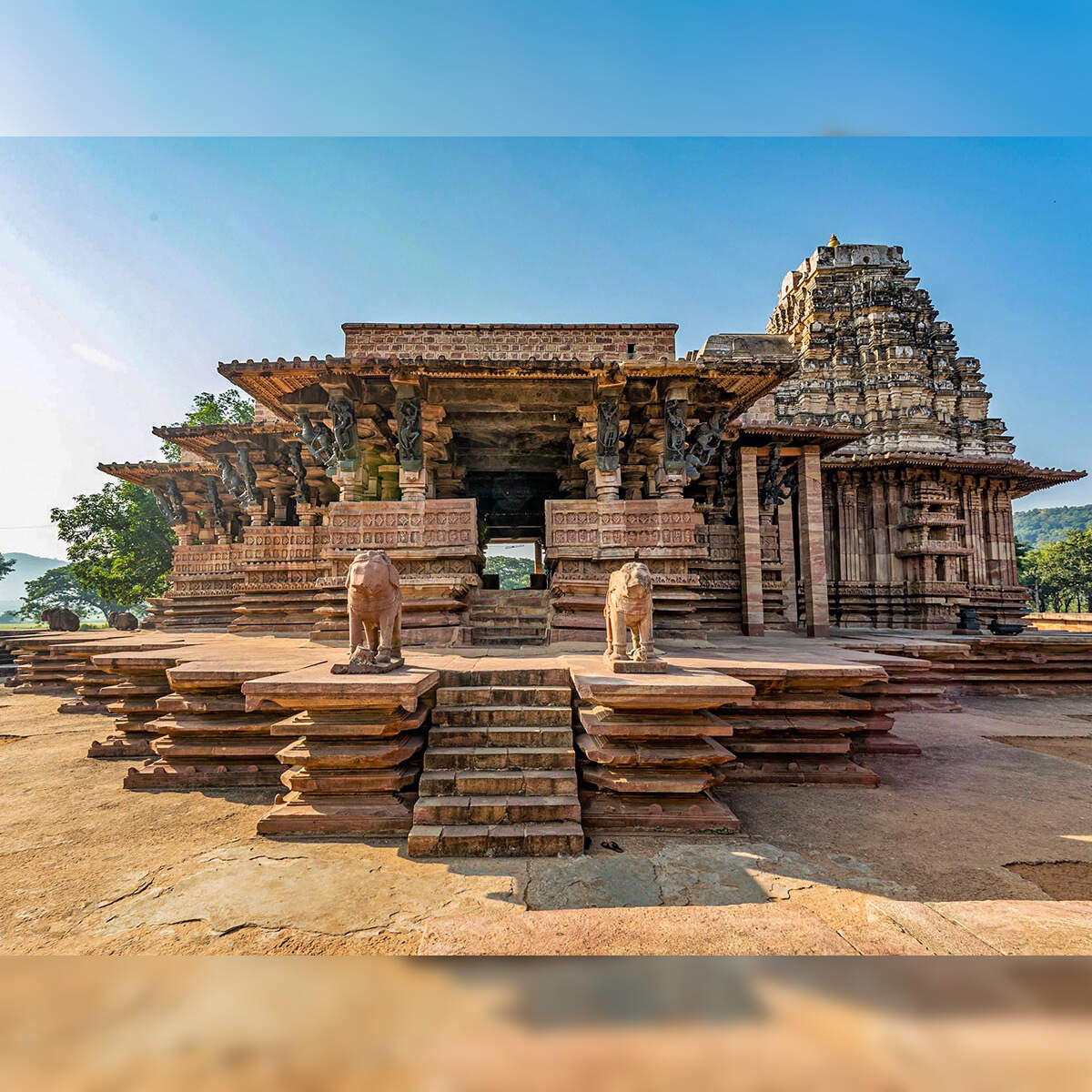
Heritage activists and the Ramappa Temple Protection Committee oppose the proposed P.V. Narasimha Rao open-cast coal mine of Singareni Collieries Company Limited (SCCL) in Mulugu district, Telangana. They fear blasting and excavation could damage the 13th-century Ramappa Temple, a UNESCO World Heritage Site, and the historic Ramappa Lake. A similar proposal was dropped after protests in 2009–10.
Concerns Raised
- Structural risk: The temple rests on a “sandbox” foundation that is vulnerable to vibrations from mine blasting.
- Lake and farming: Ramappa Lake stores about 3 TMC (thousand million cubic feet) of water and irrigates nearly 30,000 acres.
- Transparency: Activists want SCCL to publish its scientific studies and environmental assessments.
- World Heritage status: UNESCO can list a site as “in Danger” if its buffer zone or setting is harmed.
About Ramappa (Rudreshwara) Temple
| Parameter | Detail |
|---|---|
| Location | Palampet village, Mulugu district, Telangana |
| Built | 1213 CE (complex built c. 1212–1234) under Kakatiya ruler Ganapati Deva |
| Commissioned by | General Recharla Rudra |
| Named after | Its sculptor Ramappa – rare temple named after its architect |
| Deity | Lord Shiva (Rudreshwara) |
| UNESCO status | World Heritage Site, July 2021 (India’s 39th) |
| Special features | Sandbox foundation; lightweight “floating bricks” in the vimana; dolerite and granite sculptures; star-shaped platform |
| Art | Sculptures depicting Perini Shivatandavam dance; madanikas (celestial dancers) |
| Kakatiya concept | “Tank–Temple–Township” – temple built beside a water tank |
Mains Angle
- Development vs heritage: Coal for energy security against protecting irreplaceable cultural assets.
- Legal tools: Ancient Monuments and Archaeological Sites and Remains (AMASR) Act, 1958 sets prohibited (100 m) and regulated (300 m) zones; EIA Notification, 2006; UNESCO buffer zone rules.
- Way forward: Heritage Impact Assessment before mining clearance, vibration studies by ASI, and public consultation with local villagers.
7. Vithya Ramraj’s Record: How Far Has India Come in the 400m Hurdles?
Why in News?
Vithya Ramraj of Coimbatore, Tamil Nadu, won bronze in the women’s 400m hurdles at the Asian Games 2026 (Aichi-Nagoya, Japan) with 54.75 seconds. The run broke P.T. Usha’s national record of 55.42 seconds, set at the 1984 Los Angeles Olympics, which had stood for 42 years. It was her second medal at these Games after silver in the 4x400m mixed relay.
The Long Road to the Record
| Year | Event | Time | Note |
|---|---|---|---|
| 1984 | LA Olympics (P.T. Usha) | 55.42 s | Usha finished 4th by 1/100th of a second; NR set |
| Oct 2022 | National Games | 56.57 s | Vithya’s early mark |
| 2023 | Indian Grand Prix 5, Chandigarh | 55.43 s | Missed NR by 0.01 s |
| 2023 | Asian Games, Hangzhou (heats) | 55.42 s | Equalled Usha’s NR |
| Sept 2026 | Asian Games, Aichi-Nagoya (final) | 54.75 s | New NR; bronze medal |
The 2026 Podium
| Position | Athlete | Country | Time |
|---|---|---|---|
| Gold | Mariam Kareem | UAE | 54.31 s (Games record) |
| Silver | Adelina Zems | Kazakhstan | 54.58 s |
| Bronze | Vithya Ramraj | India | 54.75 s (National record) |
India’s Anu Raghavan was fifth with a personal best of 55.88 s.
How Far Has India Come?
- Usha’s mark was the second-oldest national record in Indian athletics, a sign of how slowly the event developed.
- Two Indians now run under 56 seconds, showing growing depth.
- Gains come from better coaching, the Target Olympic Podium Scheme (TOPS), Khelo India, and more international competition.
- The gap to world-class level is still wide; global finalists routinely run well under 53 seconds.
Key Facts for Prelims
- P.T. Usha (the “Payyoli Express”) is the current President of the Indian Olympic Association and a Rajya Sabha member.
- The women’s 400m hurdles has 10 hurdles at 76.2 cm height.
- The 20th Asian Games 2026 were hosted by Aichi Prefecture and Nagoya, Japan.
8. Ethiopia’s Government Retakes Mekelle After Tigrayan Fighters Withdraw
Why in News?
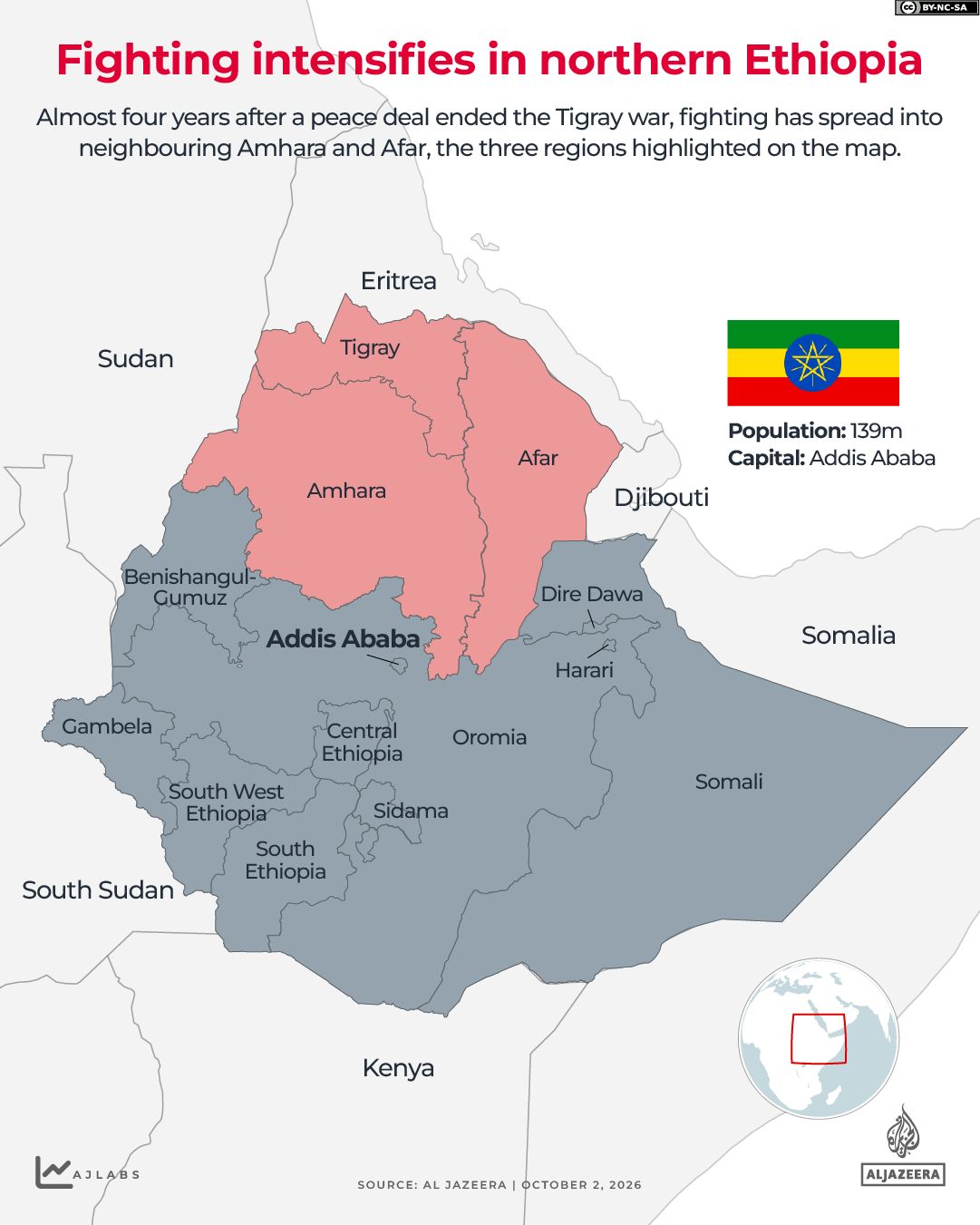
Ethiopia’s federal government has regained control of Mekelle, capital of the northern Tigray region, after fighters of the Tigray People’s Liberation Front (TPLF) withdrew from the city. This follows a sharp escalation in late September 2026 that revived fears of a return to full-scale civil war.
How the Crisis Built Up (2026)
- May – TPLF seized control of Tigray’s government from the interim administration set up under the 2022 peace deal.
- Months that followed – Federal drone strikes on Tigrayan forces; relations steadily worsened.
- September 20 – TPLF announced an alliance with six other armed groups aimed at removing PM Abiy Ahmed’s government.
- September 22–23 – Tigray declared a “defensive war” after federal drone and artillery strikes; Tigrayan forces took Mekelle’s Alula Aba Nega airport and Ethiopian Airlines halted flights to Mekelle, Axum and Shire.
- Late September – TPLF pushed into the Afar region, threatening the Addis Ababa–Djibouti trade corridor.
- Now – Tigrayan fighters withdraw and federal forces retake Mekelle.
Background: The Tigray Conflict
- TPLF dominated Ethiopia’s ruling coalition from 1991 to 2018, until Abiy Ahmed came to power.
- November 2020 – War broke out between federal forces (with Eritrean and Amhara support) and the TPLF.
- The 2020–22 war killed hundreds of thousands of people and caused famine-like conditions.
- November 2022 – Pretoria Agreement (Cessation of Hostilities), brokered by the African Union, ended the war.
Key Facts for Prelims
| Item | Detail |
|---|---|
| Capital of Ethiopia | Addis Ababa (also HQ of the African Union) |
| Capital of Tigray | Mekelle |
| Prime Minister | Abiy Ahmed (Nobel Peace Prize 2019 for peace with Eritrea) |
| Landlocked since | 1993, when Eritrea became independent |
| Main trade outlet | Port of Djibouti |
| Neighbours | Eritrea, Djibouti, Somalia, Kenya, South Sudan, Sudan |
| Mega project | Grand Ethiopian Renaissance Dam (GERD) on the Blue Nile |
| Bloc | Joined BRICS in 2024 |
India Angle
- India is one of Ethiopia’s largest trade partners and investors; both are BRICS members.
- Stability in the Horn of Africa matters for India’s maritime security near the Bab-el-Mandeb and the Red Sea (link with Topic 5).
- India supports African-led solutions, in line with its backing of the African Union’s G20 membership in 2023.